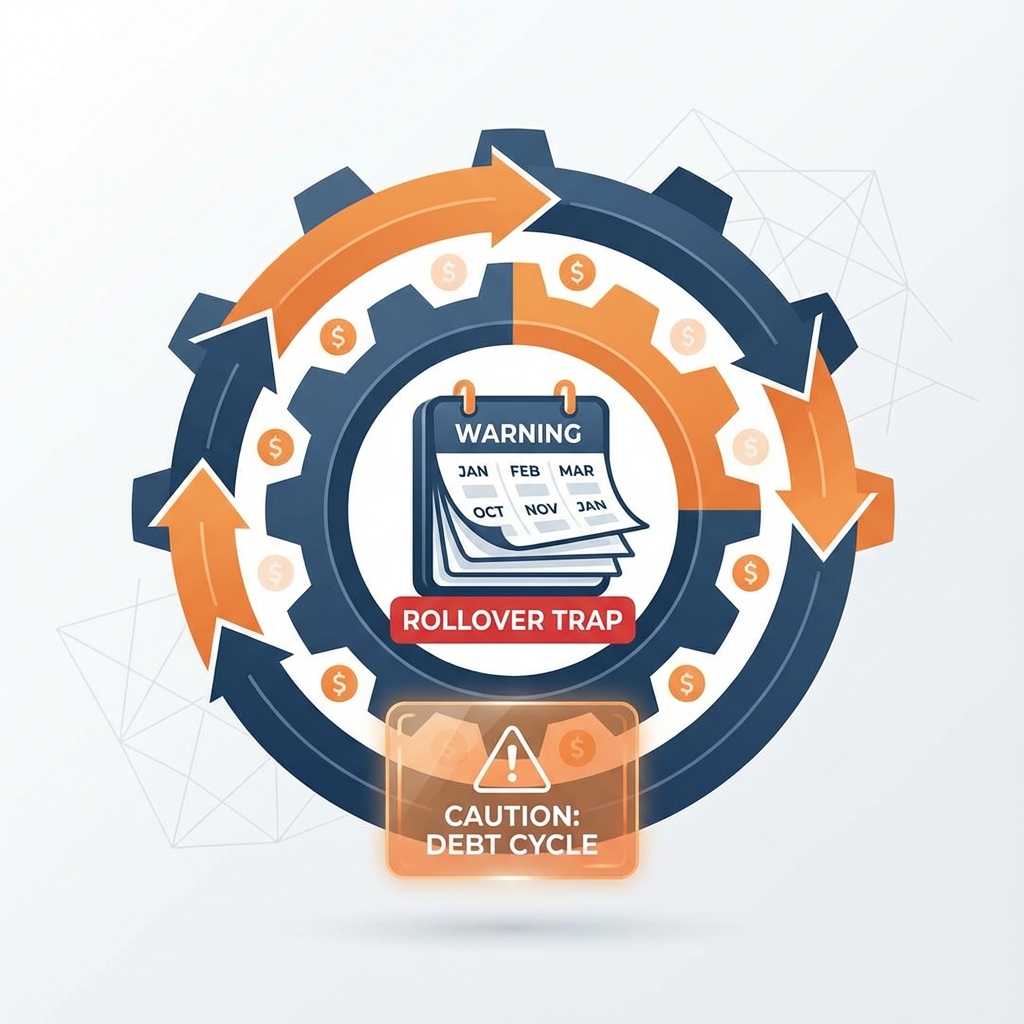
If there is one term you need to understand in the title lending industry, it is "Rollover" (also called Refinancing or Renewing). This is how lenders make the majority of their profit—and how borrowers go broke.
How It Works
Your $1,000 loan is due. You owe $1,250 total ($1,000 principal + $250 interest). You don't have $1,250.
The lender says: "No problem! Just pay us the $250 fee today, and we will extend the loan for another month."
You pay the $250. You feel relief. But financial reality is harsh: You still owe $1,000. You paid $250 for absolutely nothing but time.
The Math of 1 Year of Rollovers
If you do this every month for 12 months:
- Principal Owed: $1,000
- Interest Paid: $3,000 ($250 x 12)
- Total Owed after 1 year: STILL $1,000
You have paid three times the value of the loan and made zero progress. This is the debt trap.
The Solution
If you must rollover, pay Interest + Principal. Even paying an extra $50 a month toward the principal will eventually kill the loan. Never pay interest-only if you can avoid it.
Sarah Jenkins
Financial EditorSarah is a financial expert with over 10 years of experience in consumer lending. She is dedicated to transparency in the lending market.